
Creating a Will for End-of-Life Planning
Inheritance


- Yaizu & Makinohara Attorneys Top
- Inheritance
- Creating a Will for End-of-Life Planning
- Want to consult about end-of-life planning and inheritance in Yaizu/Makinohara
- Worried about inheritance disputes after passing away
- Want to distribute assets to specific individuals
Are you facing any of these issues in Yaizu, Makinohara, Omaezaki, Fujieda, Shimada, Yoshida Town, or other nearby areas?
At Yaizu Sogo Law Office, we offer a free first-time legal consultation on inheritance and estate matters. Consulting us once does not obligate you to retain us. We are also available on weekday evenings and on Saturdays. Please feel free to contact us by phone or email.
What Is a Will?

In recent years, end-of-life planning has become an increasingly popular topic, and our office has seen a growing number of consultations on this subject. Engaging in end-of-life planning is important to lighten the burden on your surviving family and to enrich the rest of your own life.
Many people wish to decide for themselves how their assets will be distributed after they pass away, or feel anxious about potential disputes among heirs. To avoid such troubles, we recommend preparing a will.
A will is a document in which you record your final wishes in advance regarding how your estate (inherited assets) should be distributed, so that these wishes take legal effect after your death.
A will is "the most reliable way to prevent problems in inheritance."
Even among family members who are on good terms, disagreements can arise over matters such as:
- Who will inherit the real estate
- How bank deposits should be divided
- Whether a larger share should go to the child who provided care
It is not uncommon for sudden disputes to emerge over these issues.
Benefits of Creating a Will
① You can distribute your assets as you wish
By preparing a will, you can freely decide how your assets will be left after your death. For example, if you wish to leave the family home to your eldest son and give cash rather than real estate to your second son, you can realize this desired distribution by stating it in your will.
In an extreme case, it is even possible to create a will stating "all assets shall be inherited by the eldest son, and the second son shall inherit nothing." However, because heirs other than the eldest son have a legally guaranteed minimum share called the "statutory reserved portion" (iryubun), the second son may claim this minimum entitlement from the eldest son. Since creating a will can sometimes trigger such disputes, we recommend consulting an attorney to confirm that your desired distribution does not pose legal issues.
Furthermore, without a will, the sale of real estate, transfer of title, and withdrawal of bank deposits cannot proceed until an inheritance division agreement is reached among all heirs.
With a will in place, procedures can move forward smoothly without delay.
② Disputes among heirs can be avoided
If there is no will, the method of distributing inherited assets (inheritance division) must be decided through discussion among the decedent's heirs. This is called an inheritance division conference (isan bunkatsu kyogi).
The most challenging aspect of this conference is that the consent of all heirs is required regarding the distribution method. While this may not be too difficult when there are only two or three heirs, in some cases there may be close to ten. If even one person refuses to agree, dividing the assets becomes extremely difficult, and inheritance disputes over valuable property can erupt.
By creating a will, such an inheritance division conference becomes unnecessary, which can be expected to prevent disputes among heirs.
In practice, even in cases handled by attorneys, the majority of inheritance troubles arise because there was no will.
A will is not only a document for passing on assets; it is also the best measure for protecting family relationships.
Three Types of Wills

There are three types of wills: ① Holographic Will (Jihitsu Shosho Yuigon), ② Notarized Will (Kosei Shosho Yuigon), and ③ Secret Will (Himitsu Shosho Yuigon). Since type ③ is rarely used in practice, only types ① and ② are explained below.
① Holographic Will (Jihitsu Shosho Yuigon)
A holographic will is a will created by the testator writing the entire text of the will by hand, adding the date and signature, and affixing a seal. This is the type of will that most people imagine.
There are no specific requirements for the paper or writing method, but the will must be written entirely by hand. Writing by proxy is not permitted. In addition, there are prescribed procedures for making corrections, and the risk of the will being deemed invalid is higher than with a notarized will.
Furthermore, a will prepared using a word processor or computer is, in principle, invalid (however, due to an amendment to the Civil Code, the property inventory portion no longer needs to be handwritten).
② Notarized Will (Kosei Shousyo Yuigon)
A notarized will is a will created by the testator dictating the contents of the will to a notary public, who then accurately compiles the contents into a formal document and prepares it as an authenticated deed.
A notary public is a legal expert with extensive experience in legal practice (such as former judges and prosecutors), so the will is prepared with legally sound content. There is no risk of the will being invalidated due to procedural deficiencies. For this reason, a notarized will can be considered a safer method than a holographic will.
The "safety," "cost," and "effort" involved differ significantly depending on the type of will chosen.
In particular, from the perspective of preventing inheritance disputes and ensuring the reliable execution of the will's contents, the choice of format is extremely important.
Choose a Notarized Will When Creating a Will
① Advantages and Disadvantages of a Holographic Will
The advantages of a holographic will include: no cost is involved; you can write it whenever you wish; and since it is handwritten, the contents of the will can be kept secret from everyone.
On the other hand, a holographic will has many disadvantages: there is a high possibility of it being invalidated due to procedural deficiencies; the content often has legal flaws that can cause disputes; and the will may be destroyed, concealed, or tampered with by the person who discovers it.
② Advantages and Disadvantages of a Notarized Will
With a notarized will, since a notary public prepares the document, it will never be invalidated due to procedural deficiencies, there is no concern about legally flawed content, and there is no risk of disputes arising. Moreover, since the original is stored at the notary office, there is no risk of destruction, concealment, or tampering.
Because the disadvantages of a holographic will are addressed in this format, it is a safe method of creating a will. Therefore, if you are going to create a will, we recommend a notarized will.
As for the disadvantages of a notarized will, these include: a fee must be paid to the notary office; the contents of the will become known to the notary public and two witnesses; and in principle, you must visit the notary office in person to have it prepared (although the notary can also visit your home or hospital). However, these are not significant disadvantages when the goal is to create a proper will.
Why Notarized Wills Are Chosen
- Content is reviewed by a notary public, a legal expert
- No risk of invalidation due to procedural deficiencies
- Original is stored at the notary office → No worry of loss or tampering
- The smoothest option for use in inheritance procedures
Cases Where a Notarized Will Is Particularly Recommended
- You own multiple properties
- You have a common-law relationship / children from a previous marriage
- There is a business or company succession involved
- Heirs are on bad terms with each other
- You wish to distribute assets in proportions different from statutory inheritance (e.g., you want to give more to your spouse or to the child who provided care)
Benefits of Engaging an Attorney to Prepare a Notarized Will

① You can receive legal advice on the contents of your desired will
By consulting an attorney, you can receive advice from a legal perspective on whether the contents of your desired will pose any legal issues.
For example, as mentioned earlier, if the distribution of assets is uneven, disputes such as statutory reserved portion claims among heirs may arise later. An attorney advises on the contents of the will with such potential disputes in mind; however, when you prepare a notarized will on your own, the notary public will not provide advice anticipating future disputes.
Additionally, preparing a notarized will requires gathering various documents such as financial records and family registers for the notary office, as well as drafting a summary of the will. If you engage an attorney, these preparations are handled on your behalf, eliminating the need for cumbersome tasks.
② The attorney can also store your will
The notary office creates a total of three copies of the notarized will: the original, an authenticated copy, and a certified copy. The original is kept at the notary office, and the remaining authenticated copy and certified copy are handed to the testator.
These authenticated and certified copies are important documents needed for bank inheritance procedures and real estate registration after death. However, if you store them yourself, there is a risk of losing them. There is also a risk that an heir may view the will's contents without permission and request changes in their favor, or even conceal the will.
In this regard, if you engage an attorney to prepare your will, and if you so wish, the attorney can store the will until your death. This is especially convenient when the attorney is designated as the executor of the will (discussed below), as it enables smoother post-death procedures.
③ You can also receive support for inheritance procedures after death
When you engage an attorney to prepare your will, you can also request that the attorney be appointed as the executor of the will.
An executor is, simply put, a person who carries out the procedures necessary to realize the contents of the will.
Canceling bank deposits and changing real estate registration titles normally require the signatures and seals of all heirs. However, if an executor has been appointed, the executor can carry out these procedures independently, enabling smooth cancellation and title changes.
On the other hand, any actions taken unilaterally by heirs other than the executor are void. This prevents any heir from unilaterally disposing of inherited assets or obstructing procedures after the commencement of inheritance.
If the attorney has been involved in preparing the will, the attorney is already familiar with the testator's circumstances, making it possible to carry out the will's execution smoothly. By also appointing the attorney as executor, you can receive support for inheritance procedures with peace of mind even after your death.
Reasons You Can Feel Especially Secure by Engaging an Attorney
- Asset distribution proposals that take into account the risk of statutory reserved portion infringement
- Planning based on the family's overall future (real estate handling, business succession, tax funding)
- Full delegation of practical tasks such as notary office meetings, family register collection, and preparation of financial documents
- If desired, the attorney serves as executor and provides seamless support through post-death procedures
Both the process of "creating the will" and "realizing its contents after death" are important.
By involving an attorney, the likelihood of the will being properly executed increases dramatically.
Summary

If you are creating a will as part of end-of-life planning, a notarized will provides the greatest peace of mind.
A will, regardless of the size of your estate, is "the last gift to your family for a smooth inheritance."
If you feel that disputes may arise in the future, we recommend preparing your will early.
Yaizu General Law Office provides appropriate advice tailored to the circumstances of those considering preparing a will. Please feel free to consult with us.
Frequently Asked Questions
Can the contents of a will be changed later?
Yes, they can be changed. The most recently prepared (latest) will becomes the valid will.
Can a will be created even if the person has dementia?
It depends on how far the dementia has progressed. If the content is not overly complex, it is generally possible. Please consult a physician and an attorney for details.
Does a common-law spouse have inheritance rights?
A common-law spouse is not a legal heir. Therefore, if the person passes away without a will, the common-law spouse generally cannot receive any assets. If you wish to leave assets to a common-law partner, we recommend preparing a will.
At what age should one start creating a will?
There is no age restriction. A will can be created as soon as there is someone to whom you wish to leave your assets.
Is a will essential when you own multiple properties?
It is nearly essential. Real estate is the type of asset most likely to cause disputes during inheritance division.
My children are on bad terms. Can a will prevent disputes?
A will is the most effective measure for preventing disputes. If you are concerned, please consult an attorney.
Which assets should be included in the will? Are bank deposits and real estate sufficient?
Stocks, insurance, loans receivable, cash savings at home, and cryptocurrency are also covered.
Can disputes over the statutory reserved portion be avoided?
By carefully designing the asset distribution and supplementary provisions (fugen jiko), troubles can be minimized as much as possible.
For Your Inheritance Concerns, Consult Yaizu Sogo Law Office

Yaizu Sogo Law Office handles a wide range of inheritance-related matters, including the drafting and execution of wills, renunciation of inheritance, division of estate, and claims for reduction of the statutory reserved share (iryubun).
Inheritance disputes are so notorious for the intense emotional conflict they stir up among heirs — hence their nickname, the "inheritance war" — that disputes can drag on for a long time. This is why consulting a lawyer offers significant benefits.
If you are facing an inheritance issue, please feel free to consult us. The first consultation on inheritance matters is free of charge.
At Yaizu Sogo Law Office, consultations are available not only during weekday daytime hours but also on weekday evenings and on Saturdays. Please call or email us first to make an appointment for a legal consultation.
Contact
If you are facing issues with traffic accidents, debt restructuring, or inheritance:You can consult a lawyer for free
At Yaizu General Law Office, free legal consultations are available for those facing traffic accidents, debt restructuring, or inheritance issues. There is no obligation to retain our services after a free consultation. For other areas of law, consultations are available at 5,500 yen (tax included) per 30 minutes. Please do not hesitate to contact us if you need assistance.
Reservation for Legal Consultation / Contact Us


Office
About Yaizu General Law Office
Yaizu Office
-
- Address
- 〒425-0028
3-11-4 Ekikita, Yaizu City,
Shizuoka Prefecture
-
- Phone
- 054-639-5573
-
- Business Hours
- Mon-Fri 9:00 AM - 7:00 PM Sat 9:00 AM - 5:00 PM / Closed: Sundays & Holidays
-
- Access
- 6-minute walk from Yaizu Station / Parking available
- Access
-
- Service Area
- Yaizu, Makinohara, Fujieda, Shimada, Yoshida, and surrounding areas


Makinohara Office
-
- Address
- 〒421-0422
Maison de Hautoku 1F, 140-4 Shizunami,
Makinohara City, Shizuoka Prefecture
-
- Phone
- 0548-28-6710
-
- Business Hours
- Mon-Fri 9:00 AM - 7:00 PM Sat 9:00 AM - 5:00 PM / Closed: Sundays & Holidays
-
- Access
- 4-minute walk from Shizunami 1-chome (Bus Stop) / Parking available
- Access
-
- Service Area
- Yaizu, Makinohara, Fujieda, Shimada, Yoshida, and surrounding areas


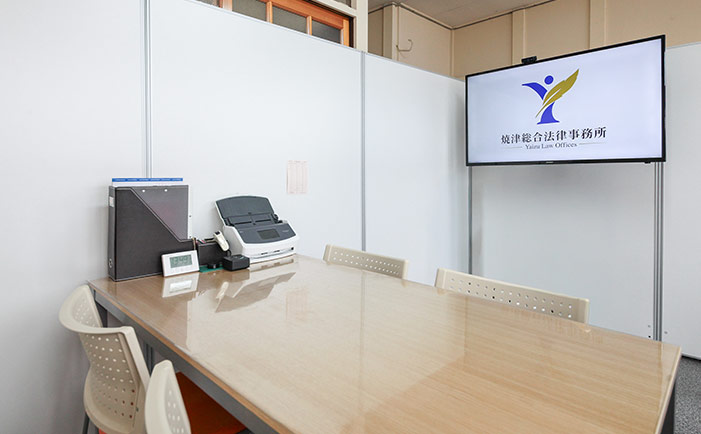


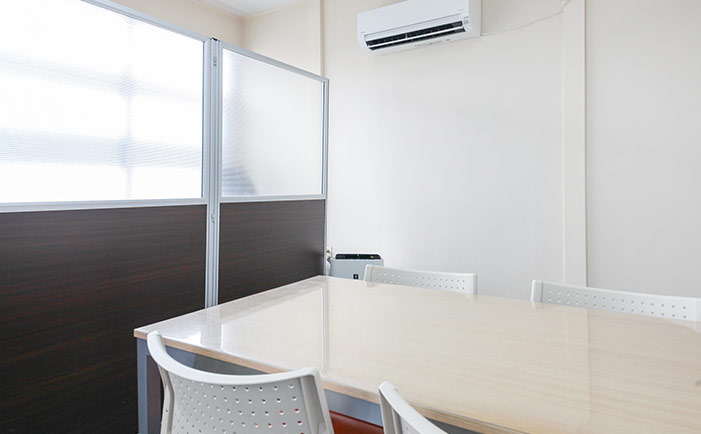
Flow
Free Legal Consultation Process
-
01

-
Making a Reservation for Free Legal Consultation
Please make a reservation by phone or email. There is absolutely no obligation to retain our services after a free consultation. If you are in need of help, please feel free to come in for a consultation.
02

-
Free Legal Consultation with an Attorney
An attorney will personally listen to the details of your situation. Bringing a memo or documents summarizing your issue will help the consultation go smoothly. If the matter is resolved through consultation alone, the process ends here.
03

-
If You Wish to Retain an Attorney
During the consultation, we will also explain the fees and outlook should we take on your case. If you wish to proceed, you may retain us at that time. You are also welcome to take the information home and consider it before making a decision.

